
Embedded analytics examples and use cases

- Blog
- Embedded Analytics
In a data-rich world, end-users require quick, easy insights without expanding their already extensive tech stacks. Traditional BI tools are too slow, too hard to use, and always an extra click away. Embedded analytics, on the other hand, addresses people’s demand for quick insights at the point of need.
By integrating dashboards into existing workflows, end-users across all industries can access, visualize, and analyze their data instantly. And for software creators, turning data into the kinds of insights that boost engagement and give their platforms a competitive edge. Let’s take a look at embedded analytics examples across a range of industries (financial, healthcare, retail, and more) to see how they can transform the power of data for end-users and app creators alike.
What are embedded analytics?
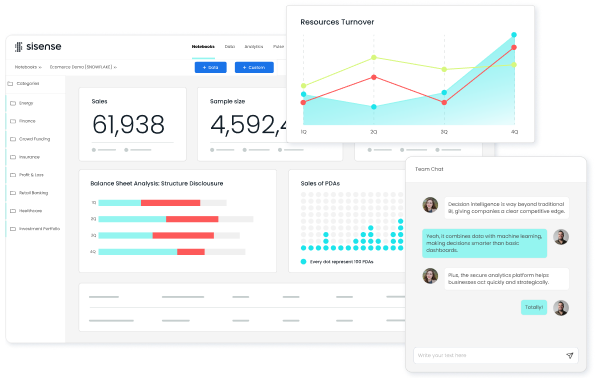
Embedded analytics integrate analytics, dashboards, and insights directly into customer-facing applications and workflows, eliminating the need for users to switch to a separate BI tool. Essentially, it’s the process of bringing data-backed insights into the tools your end-users already rely on.
This presents an opportunity for software creators to deliver greater value by offering customers more accessible, engaging experiences.
Key embedded analytics use cases
For end-users
Embedded analytics use cases for end-users are limited only by the available data. They’re powerful in any scenario where data-driven insights help people make better strategic business decisions.
Top embedded analytics use cases for end-users:
- Data-driven decision-making: Data you can’t take action on is just numbers. Embedded analytics give end-users real-time insights in context, allowing them to make smarter, data-driven decisions quickly.
- Accessible analytics for everyone: Embedded analytics make it easy for end-users to derive valuable insights without needing third-party tools or specialized expertise.
- Predictive analytics: Anticipate what’s coming next to support smart business strategies. Embedded forecasts and trend analysis help end-users plan proactively rather than reacting too late.
- AI-powered insights: A combination of automated analysis, natural language processing, and anomaly detection surfaces meaningful, contextual insights that end-users might otherwise miss.
For software creators
Software creators embed analytics in their products to drive differentiation, growth, and long-term value. The result: more competitive edge, more engaged end-users, and more revenue opportunities.
Top embedded analytics use cases for software creators:
- A competitive edge: Integrated, embedded analytics are a market differentiator. Modern customers expect platforms that deliver seamless experiences and insights as core features.
- Customer engagement and retention: It’s a timeless truth: the more value you add, the more your customers engage with your product. As they experience tangible benefits, your product becomes an essential part of their tech stack.
- Monetization opportunities: Once embedded, analytics can be packaged into premium features, usage-based pricing tiers, or add-ons that create new revenue streams.
- Faster innovation: You don’t have to reinvent the wheel. Using an Analytics Platform as a service (AnPaaS) partner reduces development burden and accelerates time-to-market, enabling teams to launch new data-driven features without slowing development.
The shift from BI dashboards to embedded insights: What 500+ data leaders are doing next
The next era of analytics is embedded, invisible, and essential to business success.
Read report
Embedded analytics examples by industry
Today, every company is a data company–collecting information from an ever-increasing range of sources. When you embed analytics directly into applications and workflows, you turn that raw data into action. The process is similar across industries, with a vast array of examples that showcase how embedded analytics use cases look in practice.
Healthcare
Healthcare organizations must balance security and accessibility while closing the data utilization skills gap.
Key embedded analytics examples in healthcare:
- Clinical performance tracking: Embedded dashboards offer real-time insights on outcomes, quality, and provider performance within care management platforms, helping teams improve care seamlessly.
- Patient engagement: Analytics embedded in patient portals allow patients to participate in their care, understand their health trends over time, and more easily track their progress toward goals.
- Patient monitoring: Embedded analytics tap into a vast array of patient data—from lab results to wearable devices—for holistic monitoring. Dashboards that bring together a holistic collection of patient data points make it easier for individuals and their providers to monitor issues in real time.
- Predictive risk scoring: AI-powered predictive analytics can flag patient risks based on trends in their healthcare data, allowing providers to proactively intervene before concerns worsen.
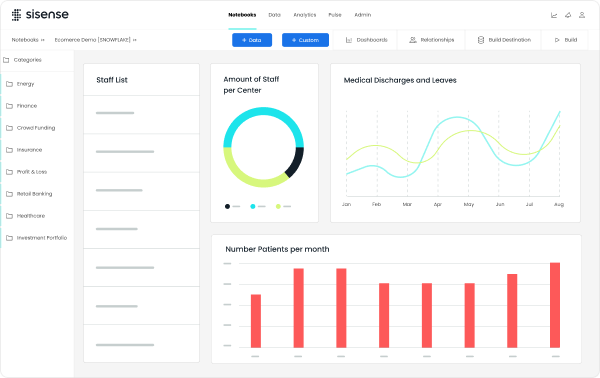
- Staff and resource optimization: Embedded analytics help clinics and hospitals optimize staff and resource allocation to reduce wait times, lower operating costs, and improve patient outcomes.
Success spotlight: GeriMedica Inzicht
Within the first six weeks of embedding Sisense, we landed 23 new customers, seven customers were trialing, and three demos were planned.
GeriMedica, a SaaS provider of elderly care software, used Sisense to embed analytics into its core platform to turn complex healthcare data into actionable insights for caregivers and clinicians. Before embedding analytics, they struggled with juggling dashboards and manual reporting. After embedding Sisense, they migrated to a smaller, more efficient set of dashboards that surface meaningful patient and care-path insights.
HR and workforce management
HR embedded analytics use cases extend through the entire employee lifecycle–from hiring through training and exit-planning.
Key embedded analytics examples in HR and workforce management:
- Real-time performance dashboards: Embedded dashboards offer HR teams and managers quick access to team and individual productivity and performance metrics, directly integrated within HRIS and workforce management systems.
- Predictive attrition modeling: Predictive analytics analyze historical data, engagement, tenure, and performance to identify employees at risk of leaving, helping HR teams develop proactive retention strategies.
- Diversity and inclusion metrics: Embedded analytics help HR teams track representation, hiring equity, pay gaps, and promotion trends in real time, enabling more equitable hiring and management practices.
- Training or engagement program tracking: Organizations running large employee programs need success metrics. Tracking participation, completion, and impact, embedded in core systems, helps HR optimize programs using real-time data.
- Embedded performance tracking: Performance insights integrated into workflows enable continuous feedback, goal tracking, and development without third-party tools.
Success spotlight: Livehire
We can provide our clients with trends, different markers and benchmarks, and other pertinent information that just wasn’t possible before. We’ve been able to create value for our clients that helps improve their business practices based on real-time insights.
LiveHire, a global talent platform, leveraged the Sisense platform to embed analytics into its recruiting software to help clients turn their extensive talent and engagement data into real-time, actionable insights to improve hiring outcomes. They previously experienced a lag issue, struggling to process and display over three terabytes of data per month. With embedded analytics, they now provide customers with data-rich, live dashboards that surface trends, benchmarks, and insights. And those insights have become a core differentiator for the platform in the competitive recruiting market.
How Measuremen transformed workplace analytics with Sisense
The power of Sisense lies in how easy it is to customize it to our needs. We’ve tailored it to high-quality data checks, diverse client use cases, and scalable analytics—all in one central place.
Read customer story
Financial services
Financial services organizations, from banks to fintech, have to balance an abundance of data and tight regulations.
Key embedded analytics examples in financial services:
- Real-time fraud detection: Embedded analytics enable teams to monitor transactions in real time, detecting anomalies and suspicious activities in banking, payments, and finance. Up-to-the-minute monitoring also ensures they can identify and respond fast to major events like cybersecurity attacks.
- Risk modeling: Financial firms rely on embedded analytics to conduct real-time risk assessments. Models analyze market volatility, risk, and credit exposures, and trigger automated alerts when predefined thresholds are reached.
- Portfolio analysis: Embedded analytics let portfolio managers access real-time stock movements, risk assessments, and asset data directly in their management platforms, blending this info with client risk preferences for personalized analysis.
- Compliance reporting: Financial organizations of all types prioritize compliance. Integrated platform analytics automate monitoring and reporting, reducing manual effort while improving accuracy and audit readiness.
- Client experience personalization: Embedded analytics empower client personalization by leveraging their data to deliver personalized offers, recommendations, and experiences.
Success spotlight: Credit Clear
We wanted an analytics platform that could easily integrate into our digital platform. We’re able to integrate Sisense within the entire delivery of what we’re doing. Sisense gave us multiple options for embedding dashboards into our client reporting portal.
Credit Clear, an Australian receivables management and debt-collection fintech, adopted embedded analytics to unify its fragmented data ecosystem and integrate insights directly into its client reporting portal. This approach accelerated access to data, simplified reporting, and empowered both internal teams and external clients to explore insights. This key differentiator helped Credit Clear boost collection outcomes, including a 35% uplift in collections for a major client.
Technology and SaaS
Software and SaaS platforms are leading the way in embedded analytics. In fact, embedded reporting is no longer a nice-to-have; end-users increasingly expect tech products to provide dynamic dashboards and insights directly in applications.
Key embedded analytics examples in tech and SaaS:
- Embedded customer-facing dashboards: Analytics provide end-users with immediate insight into KPIs, performance metrics, engagement, and outcomes. Integrating dashboards into SaaS applications gives end-users the insights they need to get the most out of the software.
- Enhanced end-user retention: Embedded insights help customers see ongoing value from a product and emphasize how it drives better results, increasing engagement and reducing churn.
- Product usage analytics: On the back end, software creators embed analytics to track feature adoption, user behavior, and workflow patterns, informing product roadmaps and marketing strategies.
- Trend analysis: Embedded analytics surface patterns and trends over time, helping both users and internal teams anticipate changes and plan proactively.
- Automated insights: Embedded analytics with AI features open up a world of possibilities for both end-users and software creators. Automated data processing, machine learning, and generative AI makes development faster and easier for creators—while end-users can tap into insights with simple, natural-language queries and narratives.
Success spotlight: Anaqua
Sisense works for us because it offers great security options and lets us create separate data cubes for each client, since the information is often sensitive and clients get squeamish about storing their information with others.
Anaqua, a leading IP management software provider, adopted Sisense to upgrade its slow reporting system with more accessible analytics. With dynamic dashboards and visualizations embedded in the platform, Anaqua now offers clients insights into IP data like patent filings, workload, and portfolio performance—all while maintaining the tight security protocols they need.
Barrios makes mission-critical analytics accessible with Sisense
Accurate, efficient, intuitive, and integrated… see how they transformed internal operations and turned data into strategic growth.
Read customer story
Supply chain
The complexities of supply chain management require analytics with laser-sharp accuracy and real-time visibility. From monitoring efficiency to forecasting and optimization, embedded analytics power more efficient and effective operations.
Key embedded analytics examples in supply chain:
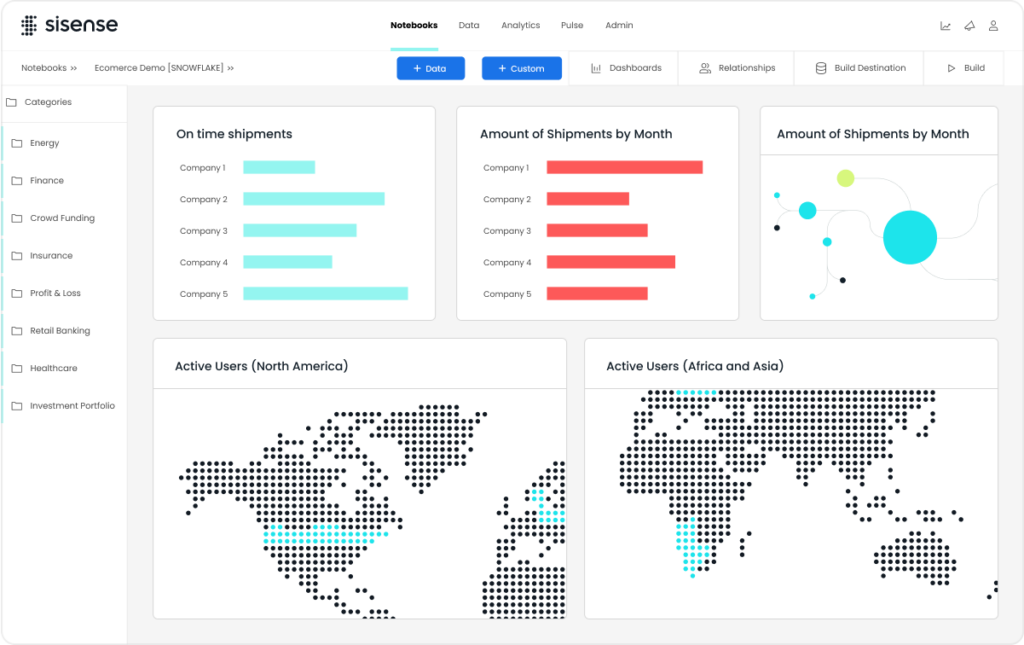
- Real-time transportation and logistics monitoring: Embedded analytics offer real-time visibility into logistics—shipments, routes, and delivery platforms—integrating third-party data within supply chain systems. This minimizes platform switching and enables faster responses to issues.
- Trend forecasting and demand planning: Predictive analytics embedded in planning tools helps organizations forecast demand and anticipate supply fluctuations, balancing inputs and outputs throughout the entire supply chain.
- Delivery optimization: Transportation companies can embed analytics in their platforms to monitor their fleet, identify delivery delays, and manage costs.
- Real-time system monitoring and reporting: Embedded dashboards within workflows monitor operational performance across warehouses, production lines, and partners. Bringing this data together makes it easier for managers to get a holistic view of overall performance.
- Vulnerability monitoring: Risk analysis can be seamlessly integrated into your existing processes. By using embedded analytics, you can spot risks throughout the supply chain early on, empowering your organization to take proactive steps to prevent and handle disruptions effectively.
Success spotlight: CTSI
We chose Sisense because of how easy it is to implement and embed in our TMS application.
CTSI, the world’s largest privately held freight audit and payment service provider, turned to Sisense to help their customers visualize and analyze massive freight invoice data. By embedding analytics into its TMS application, CTSI provided customers with deeper insights into their transactional and historical data, helping them explore real-time trends and make better shipping decisions.
Insurance
Embedded analytics help insurance teams transform how they operate, from managing fraud and risk to building efficiency and personalization into their offerings.
Key embedded analytics examples in insurance:
- Fraud detection: Embedded analytics in insurance platforms can analyze claims and policy activity in real time to identify anomalies or suspicious patterns—surfacing alerts right in the workflows teams are using every day.
- AI-powered risk assessment: Predictive analytics evaluate risk using a combination of historical data, predefined risk thresholds, and external data sources. Embedding these analytics in platforms supports more accurate underwriting and pricing decisions.
- Policy optimization: Embedded insights help insurers personalize coverage and pricing structures in line with performance trends and customer needs.
- Customer behavior tracking: Analytics embedded in customer portals and CRM systems can capture lifecycle behavior, renewal patterns, sentiment, and preferences to deliver more personalized experiences.
- Claims dashboarding and tracking: Claims dashboards can aggregate multiple data points to provide teams with end-to-end visibility into claim volume, status, and outcomes.
Success spotlight: Hastings Mutual
Sisense has truly taken over that last mile of analytics delivery for us. To be able to get people to use the analysis to actually make business decisions—that’s where Sisense comes in. End-users are no longer faced with a bottleneck and can get truly self-service BI to do their own analysis and drive their decisions.
Hastings Mutual used Sisense to integrate analytics into both its internal systems and their customer-facing agency portal. This provided users with self-service data access, reducing reporting times, boosting adoption, and enhancing visibility of key metrics. The agency portal featured daily visual summaries of the agency’s book of business, including premiums, losses, and plans. Within two months, more than 760 external users registered and began using the embedded dashboards.
Nonprofit
Nonprofits often have extensive data, but lack the staff resources or tech stack needed to analyze and manage it effectively. Embedded analytics help with everything from transparency to strategic decision-making and comprehensive campaign tracking.
Key embedded analytics examples in nonprofits:
- Predictive giving: AI tools integrated in embedded dashboards forecast expected revenue from donors, helping nonprofits more accurately budget and allocate resources.
- Audit readiness: Embedded dashboards make audit-readiness easier by integrating data from multiple sources, allowing leaders to quickly see fund usage.
- Community portals: Transparency is key in building relationships with donors and communities. Embedding analytics in external-facing portals allows the public, donors, and constituents to monitor community impact.
- Campaign ROI dashboards: Nonprofits need to account for every dollar and every campaign. Embedded ROI dashboards help stakeholders track progress, ROI, and other key metrics, organized by campaign, investment, or donor.
- Resource tracking: Nonprofits are logistics-heavy organizations. Embedded analytics help them track where their resources (volunteers, events, funds) are being used and optimize for optimal impact.
Success spotlight: Funraise
With Sisense, our nonprofits can pull unique, sophisticated data that helps them understand their fundraising efforts more effectively. Some nonprofits come to us with very complex requests. Before, it was a heavy lift. With Sisense, it’s great because now we’re able to say, ‘No problem. This is what you’re looking for.
Funraise, a nonprofit fundraising platform, integrated dashboards directly into its app to provide comprehensive insights for the many nonprofits they serve. These dashboards formed the core of the Funraise platform, allowing end-users to access self-serve reporting easily without relying on external tools. Consequently, nonprofits leveraging embedded analytics saw notable improvements, including a 7x increase in annual online fundraising, a 1.5x increase in recurring revenue, and a 12% higher donor retention rate than organizations that did not use the tool.
USA Swimming dives into data to empower future Olympians
How they went from drowning in disconnected data to making a splash with actionable insights
Read customer story
Retail
Embedded dashboards provide individual retailers and large organizations with targeted, comprehensive performance insights.
Key embedded analytics examples in retail:
- Inventory management: Retailers use embedded analytics to track sales data, optimize stock levels, and automatically adjust inventory across warehouses and brick-and-mortar locations.
- Demand forecasting: E-commerce and commercial sellers use embedded dashboards to combine real-time and historical data to predict demand. Smart forecasting enables them to adjust inventory and manufacturing orders to meet fluctuating demand and reduce overstocking.
- Product and store performance tracking: Retailers monitor performance across products and locations via dashboards embedded in POS systems, enabling fast, informed decisions.
- Personalizing customer experiences: Online platforms use embedded analytics to analyze purchase history and browsing behavior to suggest the best-fit products as people shop in real time.
- E-commerce optimization: Retailers can embed analytics into e-commerce platforms such as Shopify or Wix to analyze real-time sales, website traffic, and purchase trends. This compiles key data that drives decisions, helping sellers move faster and more effectively.
Success spotlight: Luzern
Sisense has given us the ability to create actionable analytics with an engaging user experience. It’s now easier than ever to create striking dashboards which provide data-driven insights.
Luzern connects and drives marketplace sales on Amazon for leading brands worldwide. Their platform leverages thousands of data points specific to products and competitors to enable sales and maximize margin. By white-labeling and embedding Sisense into their platform, Luzern provides its customers with interactive dashboards they can use to get rapid insights and manage their campaigns—all without even leaving the dashboard.
Marketing and sales
Marketing and sales teams must analyze full-funnel performance, from lead flow to customer behavior, conversion rates, and attribution models. Embedded analytics provide actionable insights that teams need to optimize conversion and retention throughout the customer journey.
Key embedded analytics examples in marketing and sales:
- Real-time campaign performance tracking: Analytics in marketing and sales platforms aggregate omnichannel campaign performance, providing marketing teams with a holistic view of every campaign’s performance.
- Attribution modeling: The more you know about performance, the further you can stretch every marketing dollar. Embedded dashboards display real-time attribution data—empowering teams to track their spend and return across the lead lifecycle.
- CRM Dashboards: Most CRMs have basic reporting, but embedded dashboards enhance this by allowing sales teams to view CRM and third-party data directly in-platform. They can see marketing activities, leads, revenue targets, closed deals, and pipeline velocity, not just current deals.
- Sales forecasting: Embedded AI tools in partner portals enable sales teams to forecast using historical, regional, and real-time data.
- Customer behavior analysis: Data in support platforms reveals sentiment, interactions, and lifetime trends. When combined with demographic and behavioral data, these insights enable teams to target and market to the right leads effectively.
Success spotlight: Brown Parker & DeMarinis (BPD)
Sisense was an essential building block, for relationships, not just for the platform. ROI tracking, reporting, and optimization went from a really painful pipe dream to a robust, successful reality. We have the insights now to become better partners.
BPD turned to Sisense to transform their overwhelming, long-form reporting into real-time, interactive dashboards that their clients could actually use. By consolidating data across sources and embedding customizable analytics directly into the client reporting experience, BPD made reporting more accessible and powerful—strengthening client partnerships and positioning their analytics as a key driver of strategic value.
How Bigtincan drove a 215% ROI with Sisense
Internal efficiencies + enterprise customer engagement = embedded analytics success
Read customer story
Harness the power of embedded analytics
There are countless examples of embedded analytics. Once you start exploring the possibilities, you’ll discover how bringing actionable business intelligence into your software can transform data into a powerful business asset.
Your embedded analytics experience is only as powerful as the platform behind it. The right AnPaaS partner helps you move your data from disorganized and dated to accessible in real time.
Great AnPaaS solutions include:
- Real-time, in-app insights that surface data where decisions are made
- Self-service functionality that empowers users to explore and act on data
- Flexible integrations with modern cloud and tech stacks
- Extensive customization to create seamless end-user experiences
- AI-powered features that make data easier to query and understand
Sisense is built to embed analytics into modern applications. It enables software creators to deliver fully white-labeled, scalable analytics experiences that feel native in their products—driving engagement, accelerating innovation, and turning data into a competitive advantage.
Turn data into a competitive edge
See how embedded analytics can unlock new revenue streams, improve decision-making, and drive business growth.
Book a demo




Subscribe to the Sisense newsletter
Get monthly insights on building smarter products with AI-powered analytics, from industry trends to real Sisense use cases.