
Tableau alternative
Choose analytics that fit your product, not just your dashboards
- Pricing: Sisense offers flexible pricing, while Tableau has structured licensing
- Devs: API-first architecture for devs, while Tableau requires additional configuration for embedding
- AI: Sisense embeds AI-powered analytics directly into your product, while Tableau AI is built into Tableau experiences







"Sisense is the most business-ready solution out there—and that’s after comparing it to Tableau and Power BI. It helps us consolidate, transform, and visualize data across a large number of sources, while AI analysis lets users focus on what the data is telling them instead of dealing with the data ."
Keep analytics pricing predictable as you scale. Avoid costs that scale faster than your product
Tableau’s pricing model includes structured licensing and annual contracts, which can make costs harder to predict, especially as usage grows.
For embedded analytics, Tableau also uses usage-based licensing tied to analytical impressions, meaning costs can increase with adoption.
Sisense offers flexible pricing designed to grow with your business, not against it.
Built for embedding, not adapted to it
Tableau supports embedded analytics, but it is designed as a business intelligence platform first.
Embedding Tableau requires working with APIs, authentication, and configuration layers.
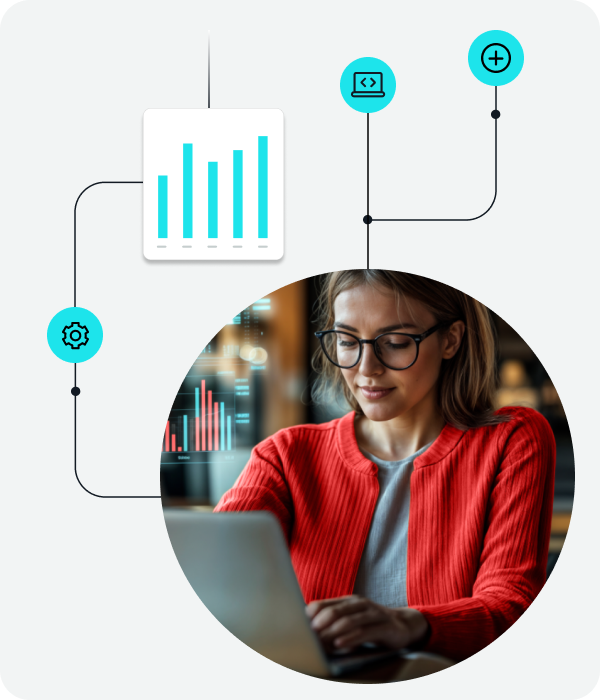
Sisense is purpose-built for embedded analytics, with APIs and SDKs that make integration seamless and scalable.
Which platform is right for your use case?
Sisense is a strong fit if you:
• Want full control over customization and user experience
• Need scalable analytics across large datasets and external users
Tableau may be a fit if you:
• Have teams already trained on Tableau
• Are focused on traditional BI workflows
Why Sisense
Why teams choose Sisense over Tableau
- • Embed analytics seamlessly into your product
- • Customize every part of the experience
- • Scale without unpredictable costs
- • Deliver fast performance across large datasets
- • Empower users with AI-driven insights

Choose Sisense for:
Ease of use
Make analytics accessible to every team
If there are already sophisticated BI users and analysts on your team, Tableau offers advanced analytics and customization capabilities.
Sisense simplifies analytics with intuitive tools and AI-powered features—so teams can build faster.
Performance
Fast insights at any scale
Tableau provides guidance on optimizing performance, including extract strategies and query tuning—indicating that performance depends on configuration and data modeling.
Sisense is designed for high-performance analytics, even with large, complex datasets.
Flexibility and integration
Integrate analytics your way
Embedding Tableau typically involves multiple layers of setup and configuration, which can increase development effort.
Embedding Tableau requires coordinating authentication, APIs, and access controls across environments.
Sisense provides a modular, API-first toolkit for building analytics experiences that fit your product, not the other way around.
Frequently asked questions about Sisense vs. Tableau.
Sisense is designed for embedding analytics directly into products, with an API-first architecture and flexible customization. Tableau is primarily a business intelligence platform focused on dashboards and reporting, with embedded capabilities layered on top.
Sisense is purpose-built for embedded analytics, making it easier to integrate, customize, and scale within applications. Tableau supports embedding, but typically requires more configuration and is not designed primarily for product integration.
Sisense offers flexible pricing designed for scalability, especially for embedded use cases. Tableau uses structured licensing, including annual contracts and usage-based pricing for embedded analytics, which can increase costs as adoption grows.
Tableau is widely used for business intelligence and advanced analytics, but some users report a steeper learning curve when working with advanced features and customization. Sisense focuses on intuitive tools and AI-powered experiences that help teams move faster.
Sisense is built for high-performance analytics at scale, designed to handle large and complex datasets efficiently. Tableau can also support large datasets but often requires additional optimization, such as extract management and query tuning.
Sisense provides an API-first platform with SDKs that simplify embedding and customization within applications. Tableau supports integration through APIs, but it typically involves more setup and configuration to embed analytics into products.
Sisense is a strong alternative for teams that need embedded analytics, flexible customization, and scalable performance. It is especially well-suited for product teams and developers building analytics into customer-facing applications.