
Embedded analytics for SaaS: A practical guide for product teams

- Blog
- Embedded Analytics
- Why embedded analytics matters for SaaS
- Core embedded analytics use cases in SaaS
- Build, buy, or both: Choose your approach to embedded analytics for SaaS
- Architectural and engineering considerations for SaaS
- How to choose an embedded analytics platform for SaaS
- How Sisense helps SaaS companies embed analytics
Embedded analytics for SaaS has evolved from a nice-to-have feature into a core driver of product differentiation, customer retention, and expansion revenue. Today’s end-users expect insights to arise directly within the applications and workflows they already use—not in disconnected BI tools or static reports. SaaS companies that deliver intuitive, in-context analytics create more engaging product experiences, help customers make faster decisions, and increase the overall value of their platform.
For product and engineering teams looking to enrich their applications with in-app analytics experiences, modern embedded analytics platforms also create a faster path to innovation. Instead of building reporting and analytics infrastructure from scratch, teams can deliver data-rich experiences that improve adoption, surface new monetization opportunities, and strengthen customer loyalty at scale.
While implementing embedded analytics can feel complex at first, the payoff is significant. The right strategy and platform can help SaaS companies turn analytics into a competitive advantage—accelerating time to value while delivering experiences customers rely on every day.
5 real-world SaaS use cases for embedded analytics
Learn more
Why embedded analytics matters for SaaS
Advancing your app’s reporting capabilities isn’t just a product enhancement. SaaS embedded analytics present a strategic business opportunity by delivering more value to end-users while driving adoption, differentiation, and growth for your business.
Today’s customers increasingly expect software to provide data-driven insights—and to make those insights fast and easy to access. Integrating rich analytics experiences into your product delivers that value, giving you a competitive edge.
The result: better retention, more monetization opportunities, and increased annual contract value (ACV).
From static reports to dynamic, data-driven experiences
For decades, organizations relied on traditional business intelligence (BI), with static, backward-looking reports. Static reports carry a host of limitations: the data is quickly outdated, insights are cumbersome to tease out, and digging deeper requires generating ever-more reports.
Even with the advent of embedded reporting, software creators too often replicate those old limitations, simply integrating static reports in their product UI.
Recent years have seen a massive evolution in embedded analytics for software products. You can now build sophisticated analytics experiences right inside your application. Dynamic dashboards, role-specific views, AI-powered data exploration, and more: modern applications transform data into meaningful insights end-users can quickly act on.
The shift from static reporting to dynamic embedded analytics for SaaS means you can now:
- Streamline analytics in one experience: Give end-users access to real-time reporting directly inside your product; no switching tools or managing separate data workflows. By bringing together data from multiple sources, your app becomes the go-to destination for business insights.
- Turn insights into action: Analytics only create value when people can act on them. Embedded analytics remove the friction of configuring and formatting data elsewhere, helping end-users move from insight to decision in the moment.
- Create a more seamless user experience: Surface analytics where work already happens. Embedded visualizations keep end-users in flow, making it easier to explore data, answer questions, and make decisions without leaving your product.
- Deliver faster, more accessible insights: Put real-time data directly into your customers’ hands. Embedded analytics make insights instantly available across teams, helping people understand performance faster and make more confident, data-driven decisions.
Impact on engagement, churn, monetization, and ACV
End-users get more value from products with embedded analytics. For SaaS companies, that translates directly into business value.
Increase ACV: Escalating ACV is vital for business growth in SaaS. Embedded analytics features create a pathway for you to move customers to higher-tier plans, expand enterprise agreements, and grow account value over time.
Increase adoption and engagement: Embedded analytics make actionable BI part of your product’s core value, not an add-on. Intuitive, personalized experiences give end-users faster time-to-value at the adoption stage and keep them engaged for long-term loyalty.
Reduce churn with ongoing value: When customers get more value from your product, churn rates plummet. Embedded analytics increase product stickiness by making insights part of end-users’ daily workflow, reinforcing recurring value and helping customers realize outcomes faster.
Unlock new monetization opportunities: Turn analytics into a growth lever. Offer premium reporting features, white label analytics experiences, or tailored enterprise capabilities to create additional up-sell opportunities and new revenue streams.
The shift from BI dashboards to embedded insights: What 500+ data leaders are doing next
The next era of analytics is embedded, invisible, and essential to business success.
Read report
Core embedded analytics use cases in SaaS
Use cases for embedded analytics are everywhere in modern SaaS platforms. You’ll find examples across every industry: healthcare, fintech, manufacturing, eCommerce, and beyond. In the world of SaaS, embedded analytics are rapidly becoming a core differentiator for software creators looking for a competitive edge amidst a crowded landscape.
Embedded analytics give end-users real-time visibility into information they need for data-driven decision-making without having to switch tools or rely on external BI platforms. Exactly how will you put those vital insights at people’s fingertips? Your specific use cases depend on your customers’ needs and business goals. But there are a few key use cases—dashboards, role-based views, self-service, and AI-powered exploration—that are especially powerful drivers of end-user engagement.
Customer-facing dashboards and portals
Dashboards and portals are one of the most important embedded analytics features to get right. For end-users, they’re often the most visible component of SaaS embedded analytics. This is the central hub for your customers’ in-app analytics experience: where they begin data exploration, track key metrics, and get rapid insights for data-driven decision-making.
Well-designed dashboards and portals play a vital role in both onboarding customers and cementing ongoing engagement. During onboarding, they help new end-users quickly see value from your product by surfacing the most important metrics in a single interface. You can deliver curated insights that align with their role or stage in the onboarding process to deepen engagement.
As customers move deeper into their journey, dashboards become key points for product stickiness. Dynamic visualizations make insights instantly accessible. Alerts from AI-powered predictive analytics surface timely signals end-users can act on immediately. End-users come to rely on your app for their day-to-day decision-making.
Beyond the dashboard: Analytics embedded where decisions happen
Dashboards are a foundation, not a ceiling. The most impactful embedded analytics experiences go further. They surface insights inside workflows, alerts, product screens, and operational views where end-users are already making decisions. That said, dashboards remain a powerful starting point, and the use cases below illustrate the range of value you can build from there.
Customer health dashboards give teams real-time visibility into adoption, satisfaction, and retention risk. They track health scores, churn indicators, onboarding progress, expansion opportunities, and ROI metrics in a single view.
Usage analytics dashboards surface product engagement data, including active users, feature adoption, onboarding completion, and usage trends across segments. They help teams understand how customers interact with the product and where to invest next.
Spend analytics dashboards provide visibility into operational costs, helping organizations track spending, identify waste, optimize vendor relationships, and improve budgeting and resource allocation in real time.
Each of these experiences can be embedded directly into the workflows where they’re most relevant, not siloed in a separate analytics tab your end-users have to remember to visit.
Role-based views for different personas
Each end-user’s unique role demands a different perspective on data. When end-users don’t have to sift through irrelevant data, they can work more efficiently and act on insights more quickly.
Operational users, administrators, and executives all require different levels of access and types of data analysis:
- Operational users require task-level metrics and workflow insights to drive daily activities and decisions.
- Administrators need to see system usage, configuration data, and account-level controls.
- Executives benefit from aggregated, high-level KPIs focused on performance, trends, and outcomes rather than granular details.
Successful embedded analytics for SaaS deliver customized experiences for each type of end-user. Choose a platform that enables role-based tailoring, applying access controls, data filters, and layout variations to ensure each end-user sees the most relevant information for their function. It’s more intuitive and relevant for your customers; they’ll respond with higher feature adoption and deeper engagement.
Self-service exploration and ad hoc reporting
One of the primary benefits of embedded analytics for software products is empowering end-users to harness the power of data. Customers increasingly demand a self-service analytics experience, not a canned set of pre-defined charts or static reports. They want to answer their own ever-changing business questions in real time.
Self-service analytics put end-users in the driver’s seat, creating custom ad hoc reports, drilling down into various filters, and building their own visualizations in real time.
A key consideration: ensuring non-technical end-users can easily tap into ad hoc reporting on demand. SaaS embedded analytics solutions make it possible with intuitive tools that allow anyone to generate the visualizations they need, regardless of their technical proficiency.
The more seamlessly end-users can self-serve data insights that matter most to them, the more value they’ll see from your embedded analytics features. That means better adoption, engagement, and retention.
AI-powered data exploration
AI has transformed how people interact with data. Just consider how search has changed: people expect to enter question in normal language and receive a clear, conversational answer in return. They’re looking for the same thing from the analytics embedded in your product.
In fact, AI features are particularly valuable in SaaS embedded analytics experiences. They reduce the complexity of understanding data. Accelerate exploration and time-to-insight. Make analytics more approachable for technical and non-technical end-users alike. And ultimately, generative AI drives analytics adoption for your customers.
To deliver on the promise of AI in embedded analytics, ensure your analytics platform includes these capabilities:
- Natural language querying (NLQ) allows end-users to ask questions in plain language. Customers can ask questions like “What caused the spike in customer churn last quarter?” or “Which departments exceeded budget targets?” and instantly receive contextual answers and visualizations.
- Natural language generation (NLG) automatically translates data into plain language. NLG can generate accessible written summaries to accompany visualizations, describe anomalies, and boil down trends into easily digestible narratives.
- Automated visualizations and insights emerge when AI proactively identifies and surfaces trends and insights, then generates alerts or visualizations. End-users get insight into questions they didn’t even know to ask, with charts, tables, and graphs they can explore further.
The big book of embedded analytics use cases
Real-world examples and impacts across four industries.
Read whitepaper
Build, buy, or both: Choose your approach to embedded analytics for SaaS
One of the first questions software creators face when implementing embedded analytics: is it better to build or buy? SaaS teams planning an embedded analytics implementation typically face a critical decision between building an in-house solution or adopting a third-party platform.
- Building entirely in-house gives you full control over every layer of the analytics experience, but it requires significant engineering resources. It also diverts time from other development priorities and features on your product roadmap.
- Buying an outside platform that already provides the foundational capabilities you need drastically reduces engineering load. You get to market faster, and your dev team can focus on product differentiation instead of building an internal analytics infrastructure.
But there’s a third way that enables you to get to market faster, reduce the engineering lift, and retain the level of control needed to maintain your application and scale with your customer.
- A buy-then-build approach starts with buying an embedded analytics platform; then you can customize extensively. A code-first, scalable, modular platform lets you quickly implement the core architecture and functionality for rapid development. Then you can tailor everything with flexible APIs and SDKs, as well as directly from your application code.
Build-then-buy is often the most effective way to deploy embedded analytics for SaaS products. The buy phase significantly reduces engineering lift by eliminating the need to build core analytics infrastructure from scratch. The analytics platform handles scalability, security, query optimization, and multi-tenant architecture considerations.
The build phase is where you tailor the embedded analytics experience to match your unique workflows, data models, and UI, and end-user needs.
- Incorporate AI features: Connect your own preferred LLM for NLQ and NLG, enable AI predictive analytics, and weave AI functionality into your entire embedded analytics experience.
- Extend the embedded experience: Add custom dashboards, workflows, and analytics views that align with specific product features or customer use cases.
- Integrate deeply with product data: Connect unlimited internal data sources, event streams, or third-party systems to enrich analytics.
- Customize the UX layer: Modify layouts, navigation, and interactions so analytics feel completely native to your application.
- Build role-specific experiences: Tailor dashboards and feature access for different personas such as admins, end-users, or executives.
- Layer in advanced logic: Add calculated metrics, business rules, and domain-specific KPIs on top of the base analytics layer.
Embedded analytics implementation: Build, buy, or both?
Get expert insights to make the right decision for your use case.
Watch webinar
Architectural and engineering considerations for SaaS
IBuilding embedded analytics for SaaS is far more than adding on some dashboards and widgets. It’s a core part of your product, and demands the same level of attention to architecture and engineering strategies. Seek an embedded analytics partner whose platform is designed with the unique needs of SaaS in mind—from developer experience to customization, multi-tenancy, and security considerations.
Flexible, efficient developer experience
Reducing the load on your development teams is one the main reasons to buy embedded analytics for SaaS. So the platform you choose must deliver an experience that truly does so: improving efficiency, reducing friction, and enabling development velocity that moves as fast as your product roadmap.
Plus, developers should have the flexibility to move quickly from idea to implementation while still having the depth of control needed for advanced use cases.
Look for an embedded analytics platform that gives you plenty of options:
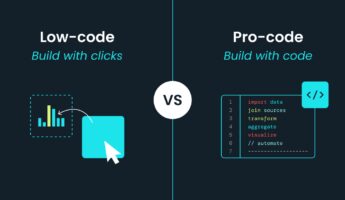
- Code-first: Allows you to build dynamic queries, filters, and components right from your application code—without locking you in to predefined widgets—for maximum control and customization.
- No-code and low-code: Speeds time-to-market with intuitive, drag-and-drop tools. Developers can rapidly build out core functionality, and non-technical users can use the platform too in order to further reduce engineering burden.
- AI-powered building: Automates data modeling, dashboard creation, and embedding with simple, natural-language prompts. And developers can leverage integrated AI code generators to accelerate builds.
Extensive customization and white labeling
Your embedded analytics are part of your product; they should feel that way even if you’re using a third-party platform. You need the ability to fully customize and white-label analytics within your application, giving them the same look, feel, and interaction patterns as the rest of your product. When analytics feel native to your product, end-users engage more frequently and trust the insights more deeply.
Look for an embedded analytics platform that supports deep and flexible customization across multiple layers:
- The UI level: You should be able to fully control layout, theming, branding, and navigation. This includes customizing charts, dashboards, and interaction patterns so analytics are indistinguishable from your core application.
- The data level: You need the ability to define business logic, metrics, and semantic models that reflect how your customers actually understand their data. This ensures consistency between application workflows and analytics insights.
- The embedding level: Developers should be able to integrate analytics using APIs, SDKs, and component-based architecture. This allows you to embed dashboards directly into workflows, user profiles, or operational screens without disrupting the end-user experience.
Extensive customization is not just a technical option; it’s a revenue-driving requirement. A fully branded, seamlessly embedded analytics experience becomes a key differentiator that sets your product apart from other platforms with similar functionality. It also unlocks new monetization opportunities. You can package customized analytics as a premium feature, offer higher subscription tiers with advanced analytics capabilities, or even white-label analytics as a standalone offering.
Multi-tenant embedded analytics
Embedded analytics for SaaS gets extra complex when you’re dealing with multi-tenant architecture. Since SaaS environments serve many different tenants in the same analytics infrastructure, it’s vital to build systems that keep data from being accessed or accidentally uncovered by the wrong party.
Rely on an analytics platform that’s built with the needs of multi-tenancy in mind. Even if you decide to build in-house from scratch, build with multiple concurrent layers of security:
- Tenant isolation separates each customer’s data at the infrastructure or database level, ensuring complete separation and strong security boundaries.
- Shared schema models store multiple tenants’ data within the same database structure, using tenant identifiers to logically separate data while improving efficiency and simplifying management.
- Row-level security (RLS) adds a fine-grained control layer that filters data at the query level, ensuring end-users can only access rows tied to their specific tenant and role-based permissions.
Multi-tenant architecture also poses scalability and performance challenges for SaaS embedded analytics. With a single system serving many customers simultaneously, poorly optimized queries or infrastructure bottlenecks can impact all end-users at once. The solution: query optimization, intelligent caching, adaptive resource management, and elastic scaling capabilities. High-performance architectures ensure fast query response times, consistent dashboard loading, and real-time analytics even under heavy concurrent usage.
Security and compliance for SaaS
The moment you bring analytics into your application, you increase your security and compliance risks. Software makers already implement stringent controls for data privacy and security. When data becomes customer-facing, your responsibility is even greater.
In addition to core privacy and data security, SaaS embedded analytics security must account for data residency requirements and regulatory compliance.
Privacy, data residency, and information security
Choose an embedded analytics platform built with security and governance at its core. Look for a partner that supports frameworks such as SOC 2 Type 2 and ISO 27701. As your application and customer base grow, your analytics environment should scale with consistent security and governance protections—without adding operational complexity or disrupting the end-user experience.
SaaS providers may also need to meet custom security clauses negotiated with large customers. These agreements can dictate how data is encrypted, how access is controlled, how logs are retained, and how audits are performed. Managing the different needs for all these organizations requires flexible analytics security architecture that can apply different compliance rules per customer while maintaining a shared underlying platform.
Industry and geographic regulatory compliance
If you operate in heavily regulated markets—or support customers across multiple regions—you need to account for standards such as HIPAA, GDPR, and CCPA. You need SaaS embedded analytics infrastructure that can control data location at a granular level, support region-specific deployments, and ensure analytics workloads respect those boundaries. Queries, caching, and processing must also adhere to residency constraints without degrading performance or user experience.
Even SaaS companies without strict compliance mandates benefit from building embedded analytics with these regulations in mind. A strong compliance foundation helps you stay ahead of changing privacy expectations while supporting future analytics expansion across products and use cases.
Watch the road: 4 pitfalls to avoid when embedding analytics
Read whitepaper
How to choose an embedded analytics platform for SaaS
So how do you find the right platform for your application? Start by assessing which embedded analytics requirements align with your needs: business goals, technical specs, and end-user experience. Key questions to ask yourself:
- What use cases and features make sense for our customer base?
- How many concurrent users do we need to support now—and what’s the projected growth?
- What security and compliance requirements does our product already adhere to, and will embedded analytics call for more?
- How does our multi-tenant architecture handle data isolation and access control?
- How quickly do we want to launch embedded analytics, and how well are we resourced to build?
That should give you a baseline of questions to ask as you explore different embedded analytics platforms. Pay particular attention to SaaS-specific needs during your evaluation, including:
- Multi-tenant support: Go with a platform that ensures secure data isolation, scalable performance, and flexible governance across customers.
- Customization and white labeling: You’ll want a platform with deep customization capabilities across UI, functionality, and end-user experience to ensure analytics align seamlessly with your application.
- A strong developer experience: Prioritize platforms that let you build your way, with code-first options for control, no- and low-code options for speed, and flexible APIs and SDKs.
Built-in AI capabilities: To get the most valuable features, look for a platform that natively integrates AI analytics, not one that just adds some AI functionality atop traditional business intelligence software.
Evaluating embedded analytics platforms? Start here.
The ultimate guide to comparing embedded analytics solutions.
Read guide
How Sisense helps SaaS companies embed analytics
SaaS companies need more than dashboards. They need analytics experiences that feel like a natural extension of their product—helping end-users make faster decisions, uncover insights in context, and take action without leaving the application.
Sisense is purpose-built for embedding. With an API-first architecture, developer-friendly SDKs, and Sisense Intelligence built natively into the platform, teams can embed insights directly into workflows while maintaining complete control over the user experience. Whether your architecture uses shared databases with RLS or fully isolated tenant databases, Sisense adapts to your model. Whether your team wants code-first control or no-code speed, Sisense supports both.
Sisense Intelligence gives SaaS teams a unified suite of AI capabilities built directly into the platform — including the Sisense Intelligence assistant for natural language querying, narrative for plain-language data summaries, and forecast for predictive analytics. These aren’t add-ons layered on top of a traditional BI platform; they’re native to the analytics engine, which means faster performance, more accurate responses, and a more coherent end-user experience.
Instead of spending engineering cycles building analytics infrastructure from scratch, product and development teams can focus on creating differentiated experiences that improve adoption, retention, and expansion. And as customer expectations continue to evolve, Sisense scales with them — so analytics stays a competitive advantage, not a maintenance burden.
How Cropin scaled global AgTech analytics without growing headcount
Cropin is a global AgTech leader whose cloud platform helps enterprises, governments, and agricultural organizations across 100+ countries digitize farming operations and manage risk at scale. As Cropin modernized its architecture and built out Cropin Cloud, its legacy analytics stack—a disconnected combination of Jasper Reports and Talend requiring a team of 10 to 12 engineers to manage—couldn’t keep pace.
Every analytics request had to route through internal teams, report delivery took three to six weeks, and analytics existed entirely outside the core product experience. Cropin needed embedded analytics that could scale with its growth, integrate natively into Cropin Cloud, and reduce dependence on engineering resources, not add to them.
After evaluating Power BI, Tableau, and Qlik, Cropin chose Sisense for its scalable architecture, flexible APIs and SDKs, and native multi-tenancy support. Using JavaScript-based embedding and Compose SDK, Cropin integrated analytics directly into Cropin Cloud, creating a fully white-labeled experience in which dashboards and insights appear as a natural part of the product. Sisense multi-tenancy capabilities allowed Cropin to support multiple customers, geographies, and use cases within a single architecture, which is critical for a platform serving stakeholders as diverse as global enterprises like Walmart and PepsiCo and the Mexican government, each with unique data structures and requirements. Role-level data security gave Cropin granular control over data visibility across organizational hierarchies, from individual farmers to executives.
The results reflect what’s possible when embedded analytics are treated as a core product capability rather than a reporting afterthought. Customers who opted into self-service analytics can now build their own reports on demand, eliminating wait times entirely. For customers requesting reports, turnaround time dropped from three to six weeks to one to two week sprint cycles.
And critically, Cropin scaled its analytics capability globally without adding engineering headcount, turning what was once a manual, resource-intensive process into a productized, scalable capability.
As Cropin’s CTO Prakhyath Hegde put it: “Sisense gave us a way to scale as a product. We are now able to scale our business without needing additional headcount.”
Scale analytics without limits
Future-proof your product with Sisense’s AI-driven, composable analytics. Built to scale with your vision.
Book a demo


Subscribe to the Sisense newsletter
Get monthly insights on building smarter products with AI-powered analytics, from industry trends to real Sisense use cases.